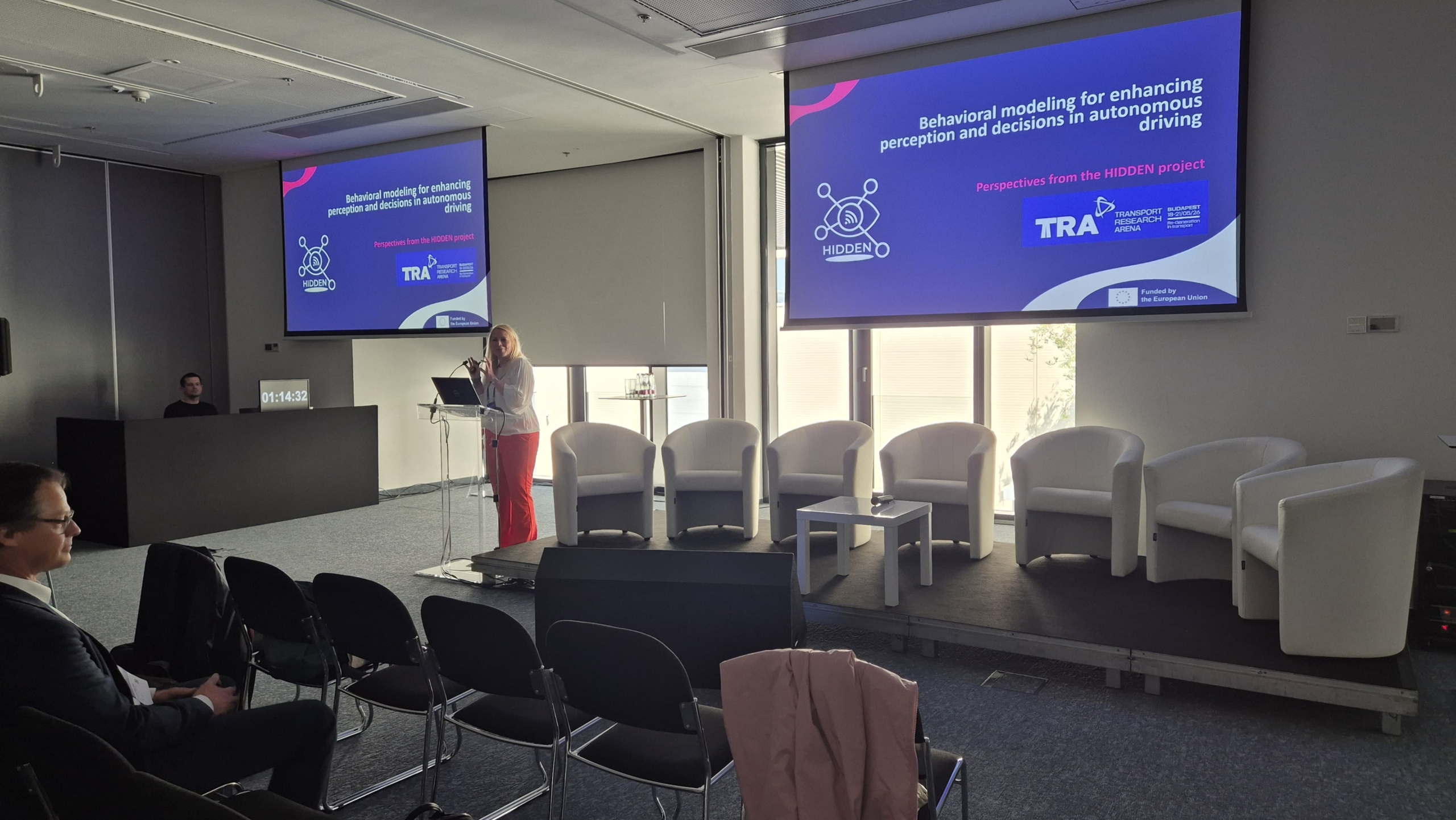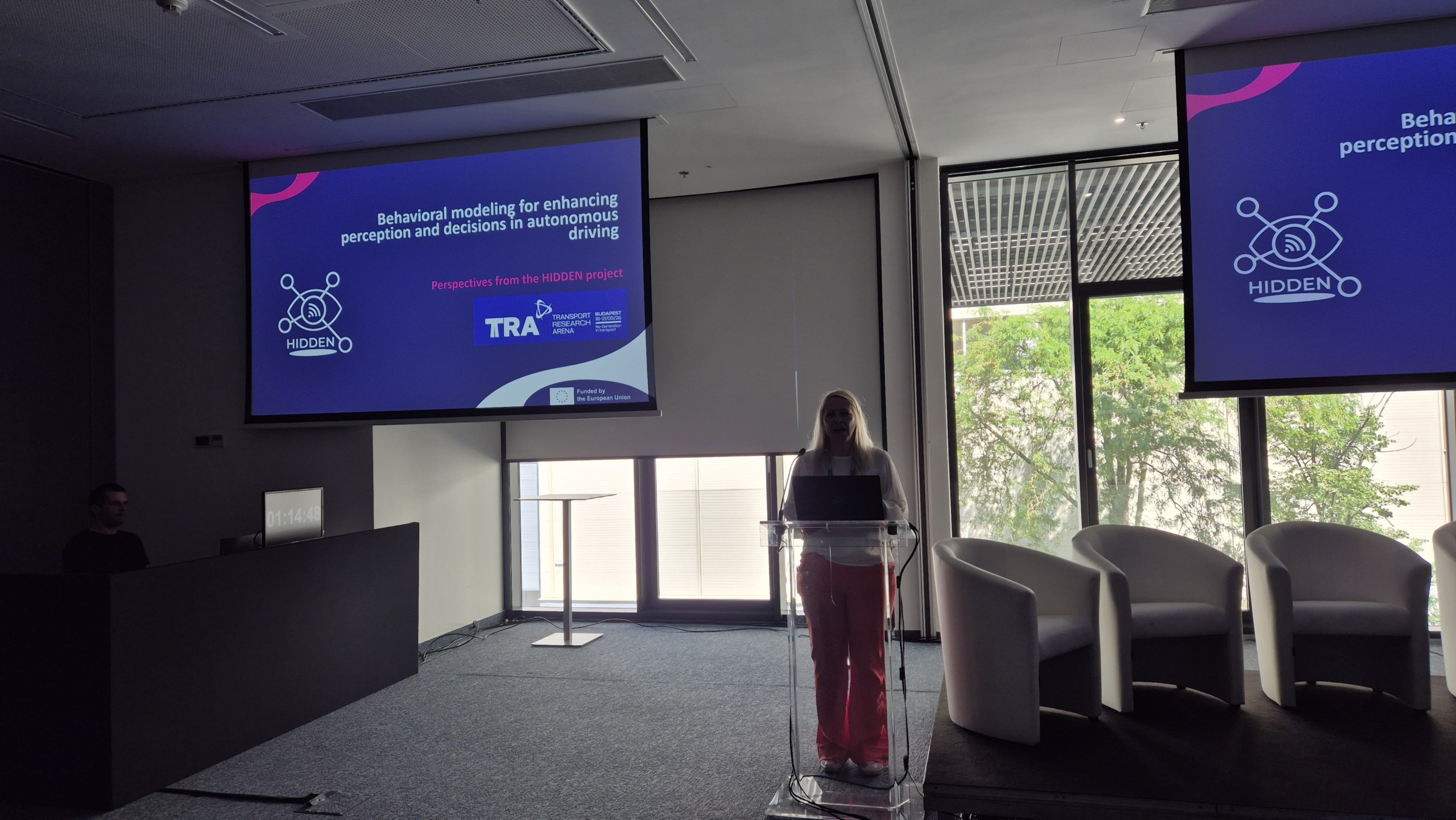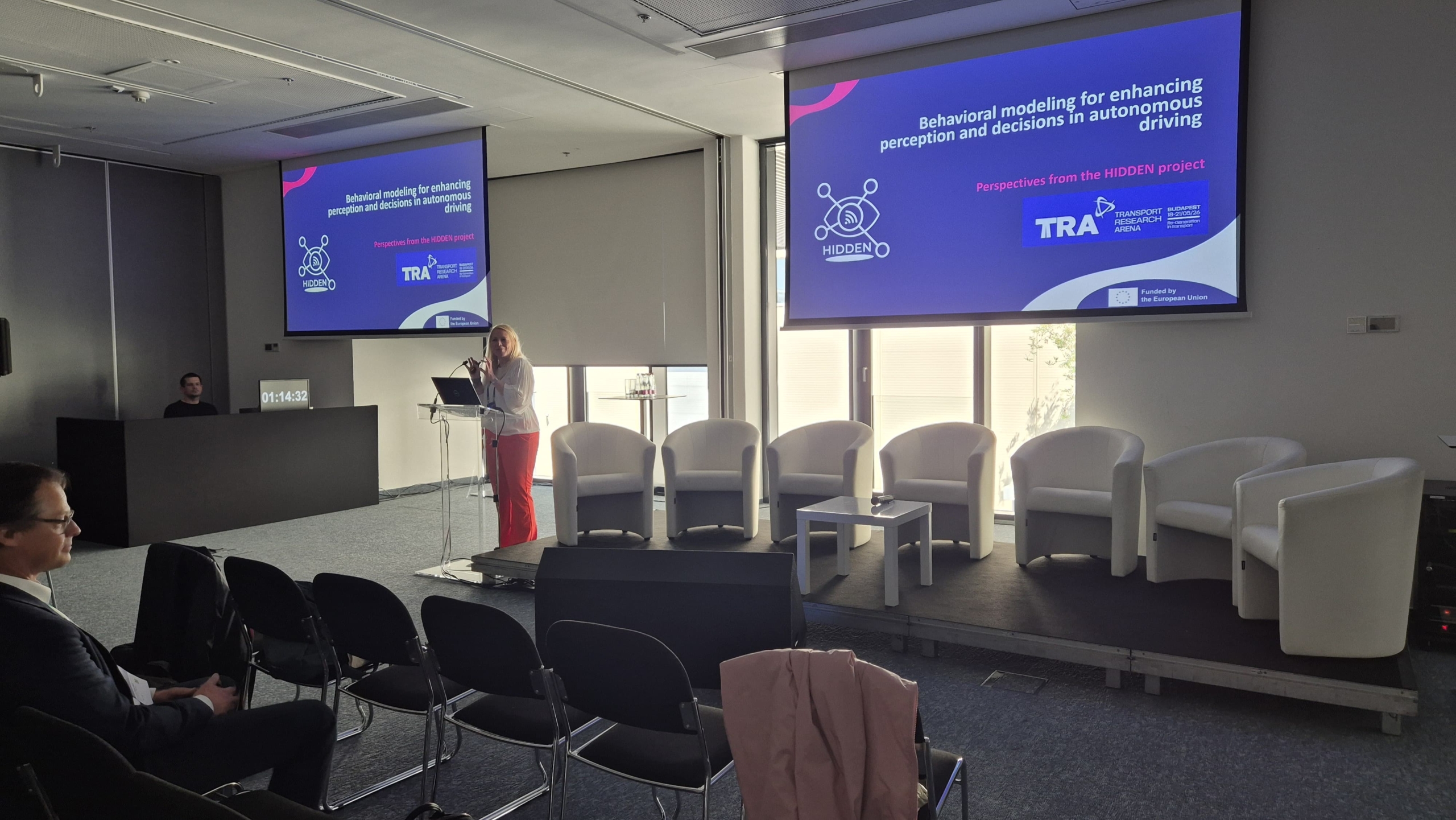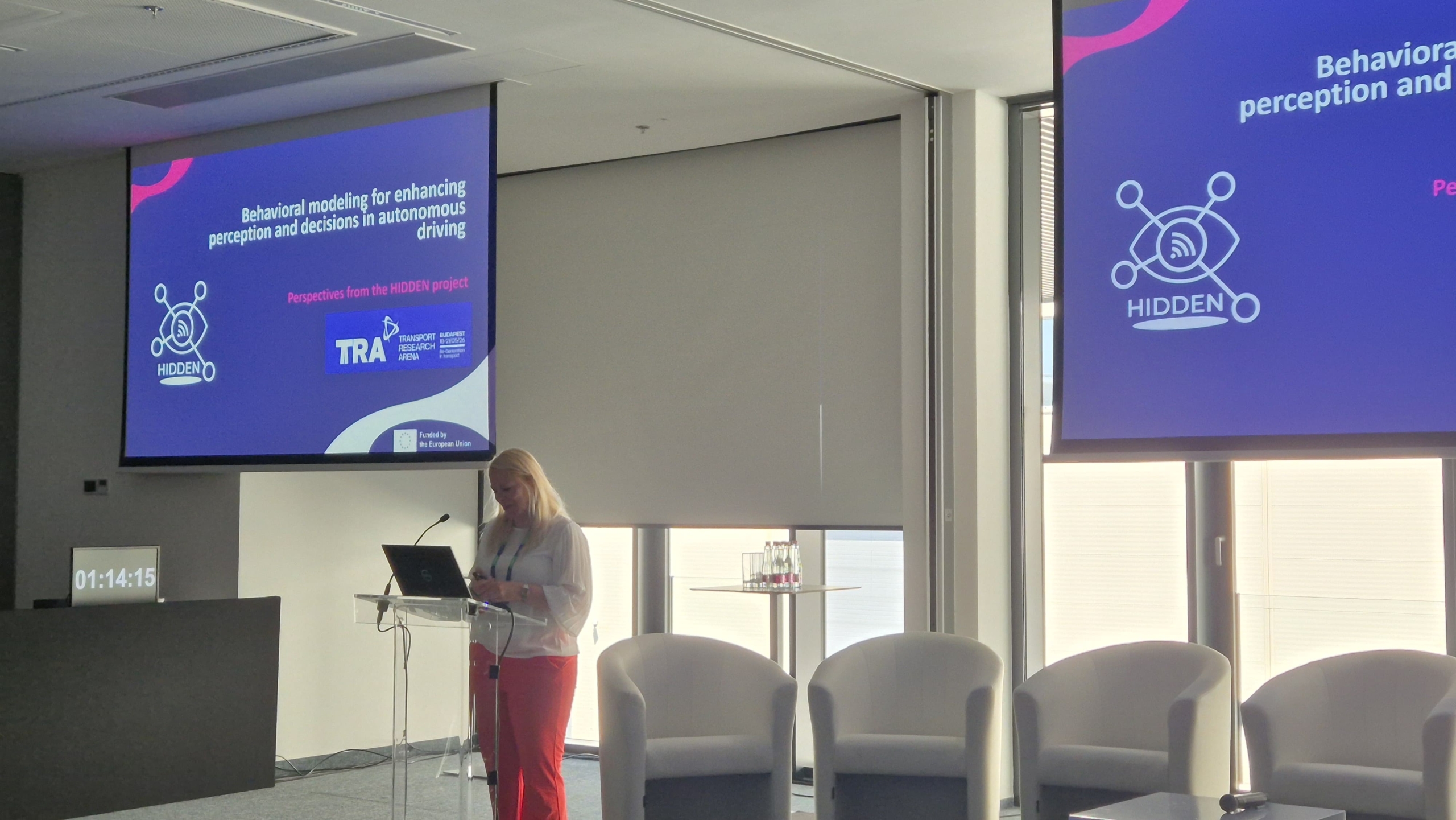
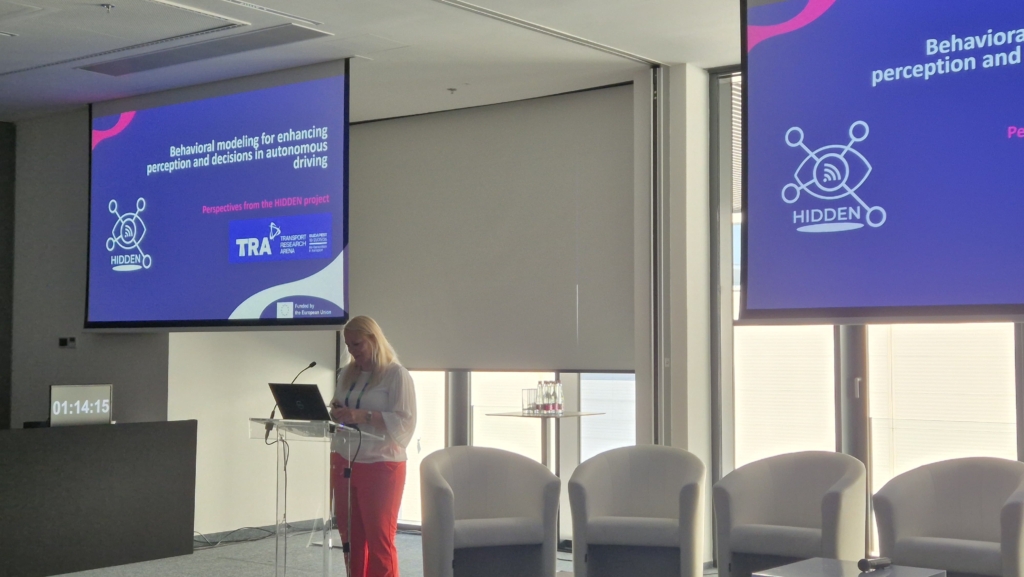
On May 21st, 2026, the EU-funded BERTHA project organised a two-hour workshop entitled “Integrating Human Behaviour into Autonomous Driving” at the Transport Research Arena (TRA) 2026 in Budapest. The event brought together experts, researchers, and project representatives to discuss the role of behavioural modelling in the development of safer and more human-centric automated driving systems.
HIDDEN was invited -as a sister project – to contribute to the workshop and present its latest research activities in the field of behavioural modelling for Cooperative, Connected and Automated Mobility (CCAM). Representing the HIDDEN consortium, Dr Johanna Tzanidaki (SAE Group Europe) introduced the project’s vision, use cases, and ongoing work on modelling the behaviour of vulnerable road users (VRUs) in complex urban environments.
While both BERTHA and HIDDEN address behavioural modelling challenges in automated driving, they approach the topic from complementary perspectives. BERTHA – which runs its third and final year- focuses on modelling driver behaviour and has developed 15 distinct behavioural profiles through extensive simulation activities using the CARLA simulator, ranging from cautious and conservative driving styles to more emotional and risk-taking behaviours. The project aims to enhance the predictability and safety of automated vehicles by enabling them to better understand and replicate human driving behaviour. HIDDEN, on the other hand, concentrates on one of the most critical challenges in urban automated mobility: the detection and prediction of the behaviour of vulnerable road users that may be temporarily hidden or occluded from the vehicle’s direct line of sight. Leveraging the concept of collective awareness and combining artificial intelligence with human expertise through Hybrid Intelligence (HI) approaches, HIDDEN seeks to improve the ability of automated vehicles to understand, anticipate, and safely respond to human behaviour in dynamic urban environments.
During the workshop, HIDDEN presented its work on trajectory prediction, behavioural modelling methodologies, and the challenges associated with understanding the intentions and movement patterns of pedestrians, cyclists, and other road users. The project is currently refining its use case variations and system architecture, which will integrate Cooperative Perception Messages (CPMs), collective awareness maps, infrastructure data, and information from nearby connected vehicles to support safer decision-making by automated vehicles.
The workshop also highlighted the growing importance of behavioural modelling as a key enabler for trustworthy and human-centric automated mobility. While BERTHA focuses on modelling driver behaviour, HIDDEN advances the state of the art by training AI models on the behavioural psychology of real road users, allowing automated systems to better understand how people move, make decisions, and interact within the road environment.
The exchange of knowledge between the two projects demonstrated the value of collaboration within the European CCAM ecosystem and reinforced the importance of multidisciplinary approaches to address the technical, societal, and safety challenges of future automated mobility.
As HIDDEN progresses through its first year of research and innovation activities, the project continues to work towards its goal of improving the safety, reliability, and societal acceptance of automated vehicles by tackling the challenge of occlusion and enhancing collective perception in complex urban environments.