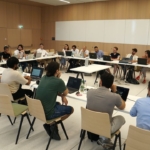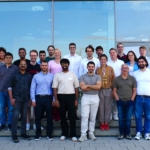
On 1–2 July 2026, the HIDDEN consortium gathered in Freiburg, Germany, for its second Plenary Meeting and General Assembly, kindly hosted by the University of Freiburg (UFR).
After twelve months of intensive research and innovation activities, 22 experts from research organisations and industry across seven European countries came together to review the project’s achievements, discuss ongoing developments, and define the next steps towards delivering safer and more trustworthy solutions for Connected, Cooperative and Automated Mobility (CCAM).
During the two-day meeting, partners presented the progress achieved across all technical work packages, highlighting advances in artificial intelligence, collective perception, human-centred decision-making, and the project’s pilot activities. The discussions provided an excellent opportunity to align technical developments, strengthen collaboration across the consortium, and plan the activities for the project’s second year.
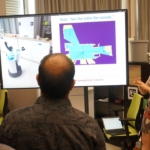
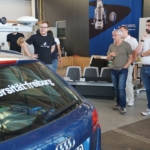
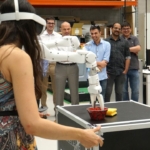
As part of the meeting, consortium members also had the opportunity to visit Professor Abhinav Valada’s Robot Learning Lab at the University of Freiburg. The laboratory showcased its cutting-edge research in robot learning and machine learning, demonstrating the facilities and prototype vehicle testing environment that support HIDDEN’s research activities. The visit offered valuable insights into the technologies underpinning the project’s AI developments and fostered fruitful discussions on future research directions.
HIDDEN addresses one of the most critical challenges in autonomous driving: detecting and safely responding to hidden road users and objects that cannot be directly perceived by onboard sensors. From children emerging from behind parked vehicles to cyclists obscured by traffic or blind spots, these situations represent significant safety risks, particularly for vulnerable road users.
To tackle these challenges, HIDDEN is developing fail-safe AI-based collective awareness systems and predictive decision-making agents that combine cooperative perception, Hybrid Intelligence, and human-centred ethical principles. By enabling vehicles to better understand and anticipate complex traffic situations, the project aims to significantly improve road safety and increase trust in future automated driving systems.
The Freiburg meeting marked an important milestone in the project’s journey, reinforcing the consortium’s shared commitment to advancing trustworthy artificial intelligence for safer, smarter, and more human-centric mobility. As HIDDEN enters its second year, partners will continue developing, integrating, and validating the project’s innovative technologies through real-world demonstrations and close collaboration with the wider European CCAM ecosystem.